 GrabCAD
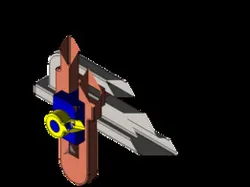
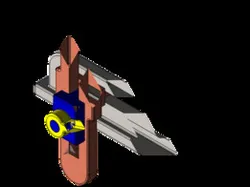
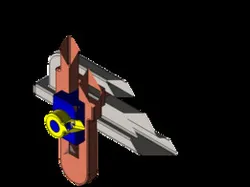
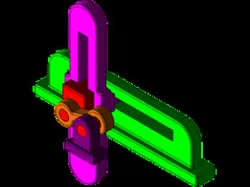
slider crank
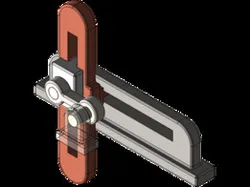
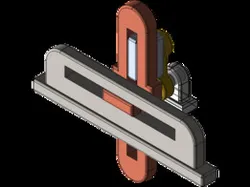
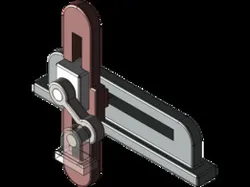
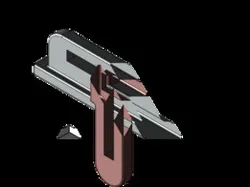
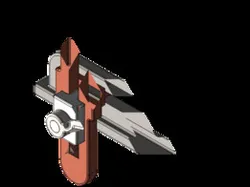
A slider-crank mechanism is a mechanical system that converts rotary motion into linear motion, or vice versa. It is one of the most fundamental and widely used mechanisms in engineering, especially in engines and pumps.
The slider-crank consists of four main components:
Crank – A rotating arm connected to a rotating shaft.
Connecting Rod – A rigid link that connects the crank to the slider.
Slider (or Piston) – A component that moves back and forth in a straight line.
Frame – The fixed structure that supports the mechanism.
When the crank rotates, it pushes and pulls the connecting rod, causing the slider to move in a straight reciprocating motion. This motion conversion makes the slider-crank mechanism essential in machines such as the internal combustion engine. For example, in a car engine, the piston moves linearly due to combustion pressure, which turns the crankshaft and produces rotational motion to drive the wheels.
Slider-crank mechanisms are commonly found in:
Automobile engines
Steam engines
Reciprocating compressors
Pumps
The mechanism is valued for its simplicity, reliability, and efficiency in transferring motion and force. Because of these characteristics, the slider-crank remains one of the most important mechanisms in mechanical engineering applications.
Direct link to the original creator's page
Also Available On
Similar Models
Model Specifications
Frequently Asked Questions
How do I download slider crank?
Click the "View on GrabCAD" button above to visit the original model page on GrabCAD. You can download the SOLIDWORKS file directly from the creator's page for free.
What 3D printer can I use for this model?
This model is compatible with most FDM 3D printers (Creality Ender 3, Prusa MK3S+, Bambu Lab, etc.) and resin printers (Elegoo, Anycubic). Check the original page for recommended print settings and materials.
Is this 3D model free to download?
Yes, this model is available as a free download on GrabCAD. Some creators accept tips or donations.
Can I modify this file?
Check the license (see original page) on the original GrabCAD page. Most STL files can be modified using free software like Blender, TinkerCAD, or Meshmixer.