 thingiverse
Lambda Spiral
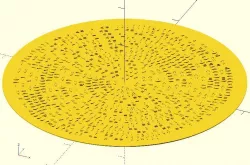
The (archimedean) spiral is formed by a lambda expression shown below. It performs computation similar to `[1, 2, 3].map(elem => elem - 1)` (JavaScript).
`(f => (x => f(n => x(x)(n)))(x => f(n => x(x)(n))))(m => l => f => (_ => _)((l => l(_ => _ => (_ => f => f(_ => _))))(l))(_ => (_ => (f => _ => f(_ => _))))(_ => (h => t => (l => r => f => f(l)(r))(h)(t))(f((p => p(l => _ => l))(l)))(m((p => p(_ => r => r))(l))(f))))((e => (l => (f => (x => f(n => x(x)(n)))(x => f(n => x(x)(n))))(v => r => l => (_ => _)((l => l(_ => _ => (_ => f => f(_ => _))))(l))(_ => r)(_ => v((h => t => (l => r => f => f(l)(r))(h)(t))((p => p(l => _ => l))(l))(r))((p => p(_ => r => r))(l))))(_ => (f => _ => f(_ => _)))(l))(e(_ => _ => (f => _ => f(_ => _)))))((f => (x => f(n => x(x)(n)))(x => f(n => x(x)(n))))(r => t => h => (_ => _)((n => n(_ => (_ => f => f(_ => _)))(_ => f => f(_ => _)))(h))(_ => t)(_ => r((h => t => (l => r => f => f(l)(r))(h)(t))(h)(t))))(_ => (f => _ => f(_ => _)))(f => x => f(x))(f => x => f(f(x)))(f => x => f(f(f(x))))))(e => (m => n => n(n => (p => p(l => _ => l))(n(p => (l => r => f => f(l)(r))((p => p(_ => r => r))(p))((n => f => x => f(n(f)(x)))((p => p(_ => r => r))(p))))((l => r => f => f(l)(r))(_ => _)(_ => x => x))))(m))(e)(f => x => f(x)))`
The expression is also a legal ES6 arrow function. You can save the following code to a .js and use [Node.js](https://nodejs.org/en/) to run it.
let lt = (f => (x => f(n => x(x)(n)))(x => f(n => x(x)(n))))(m => l => f => (_ => _)((l => l(_ => _ => (_ => f => f(_ => _))))(l))(_ => (_ => (f => _ => f(_ => _))))(_ => (h => t => (l => r => f => f(l)(r))(h)(t))(f((p => p(l => _ => l))(l)))(m((p => p(_ => r => r))(l))(f))))((e => (l => (f => (x => f(n => x(x)(n)))(x => f(n => x(x)(n))))(v => r => l => (_ => _)((l => l(_ => _ => (_ => f => f(_ => _))))(l))(_ => r)(_ => v((h => t => (l => r => f => f(l)(r))(h)(t))((p => p(l => _ => l))(l))(r))((p => p(_ => r => r))(l))))(_ => (f => _ => f(_ => _)))(l))(e(_ => _ => (f => _ => f(_ => _)))))((f => (x => f(n => x(x)(n)))(x => f(n => x(x)(n))))(r => t => h => (_ => _)((n => n(_ => (_ => f => f(_ => _)))(_ => f => f(_ => _)))(h))(_ => t)(_ => r((h => t => (l => r => f => f(l)(r))(h)(t))(h)(t))))(_ => (f => _ => f(_ => _)))(f => x => f(x))(f => x => f(f(x)))(f => x => f(f(f(x))))))(e => (m => n => n(n => (p => p(l => _ => l))(n(p => (l => r => f => f(l)(r))((p => p(_ => r => r))(p))((n => f => x => f(n(f)(x)))((p => p(_ => r => r))(p))))((l => r => f => f(l)(r))(_ => _)(_ => x => x))))(m))(e)(f => x => f(x)));
console.log(array(lt)); // show [0, 1, 2]
function natural(n) {
return n(i => i + 1)(0);
}
function array(lt) {
let unit = _ => _;
let no_use = unit;
let yes = f => _ => f(no_use);
let no = _ => f => f(no_use);
let when = unit;
let pair = l => r => f => f(l)(r);
let left = p => p(l => _ => l);
let right = p => p(_ => r => r);
let nil = _ => yes;
let con = h => t => pair(h)(t);
let head = left;
let tail = right;
let is_nil = l => l(_ => _ => no);
let isEmpty = is_nil;
function arr(acc, l) {
return when(isEmpty(l))
(() => acc)
(() => arr(acc.concat([natural(head(l))]), tail(l)));
}
return arr([], lt);
}
Direct link to the original creator's page
More from justinsdk

Similar Models
 cgtrader
 cgtrader
 thingiverse
 cgtrader
 cults3d
 cgtrader
 cgtrader
 thingiverse
Model Specifications
Frequently Asked Questions
How do I download Lambda Spiral?
Click the "View on thingiverse" button above to visit the original model page on thingiverse. You can download the STL file directly from the creator's page for free.
What 3D printer can I use for this model?
This STL file is compatible with most FDM 3D printers (Creality Ender 3, Prusa MK3S+, Bambu Lab, etc.) and resin printers (Elegoo, Anycubic). Check the original page for recommended print settings and materials.
Is this 3D model free to download?
Yes, this model is available as a free download on thingiverse. Some creators accept tips or donations.
Can I modify this STL file?
Most STL files can be modified using free software like Blender, TinkerCAD, or Meshmixer. Check the license on the original thingiverse page to see if modifications are permitted by the creator.