 thingiverse
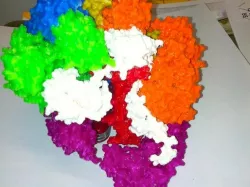
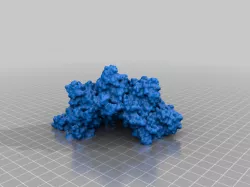
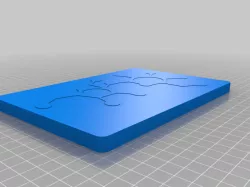
Clamp Loader Complex
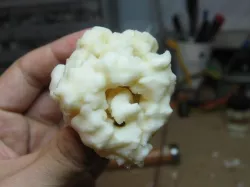
The fact is that DNA polymerases are not very processive. They tend to fall off of DNA rather quickly, and because of that they are pretty slow. How to increase the speed and fidelity of a polymerase? You shackle it to the DNA molecule it's replicating, using this.
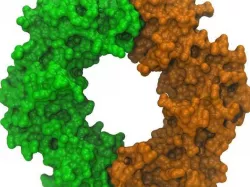
This is a complex which attaches a sliding clamp around a DNA molecule. Polymerase then sticks to the end of the sliding clamp, and as a result gets stuck fast to the DNA it's replicating, increasing its processivity from 10 base pairs to 80,000.
This is a closed clamp, pdb ID 3u5z.
Instructions
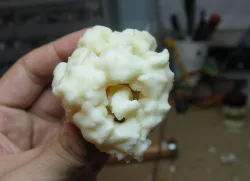
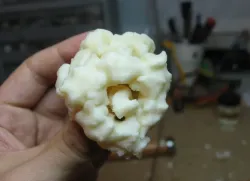
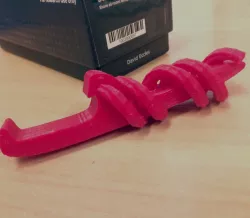
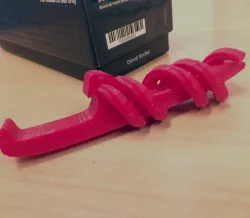
Print with support. I used 0.4mm layer width and 0.128 layer height (with a 0.4mm nozzle) 45mm/s feed rate. I used KISSlicer and support set to "dense", with the support flow rate reduced to 70% of the object using an external script.
Support was fairly difficult to remove, I used a piece of armature wire to get it out of the cracks and crevices.
Direct link to the original creator's page
Also Available On
More from destroyer2012
 prusaprinters
 prusaprinters
 thingiverse
 thingiverse
 prusaprinters
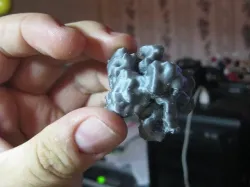 prusaprinters
Similar Models
Model Specifications
Frequently Asked Questions
How do I download Clamp Loader Complex?
Click the "View on thingiverse" button above to visit the original model page on thingiverse. You can download the STL file directly from the creator's page for free.
What 3D printer can I use for this model?
This STL file is compatible with most FDM 3D printers (Creality Ender 3, Prusa MK3S+, Bambu Lab, etc.) and resin printers (Elegoo, Anycubic). Check the original page for recommended print settings and materials.
Is this 3D model free to download?
Yes, this model is available as a free download on thingiverse. Some creators accept tips or donations.
Can I modify this STL file?
Most STL files can be modified using free software like Blender, TinkerCAD, or Meshmixer. Check the license on the original thingiverse page to see if modifications are permitted by the creator.